Travel guide
Best time to visit Jericoacoara
Dry season, rainy months, full lagoons and the best wind for kitesurf — everything you need to pick the right month for your trip to Jeri.
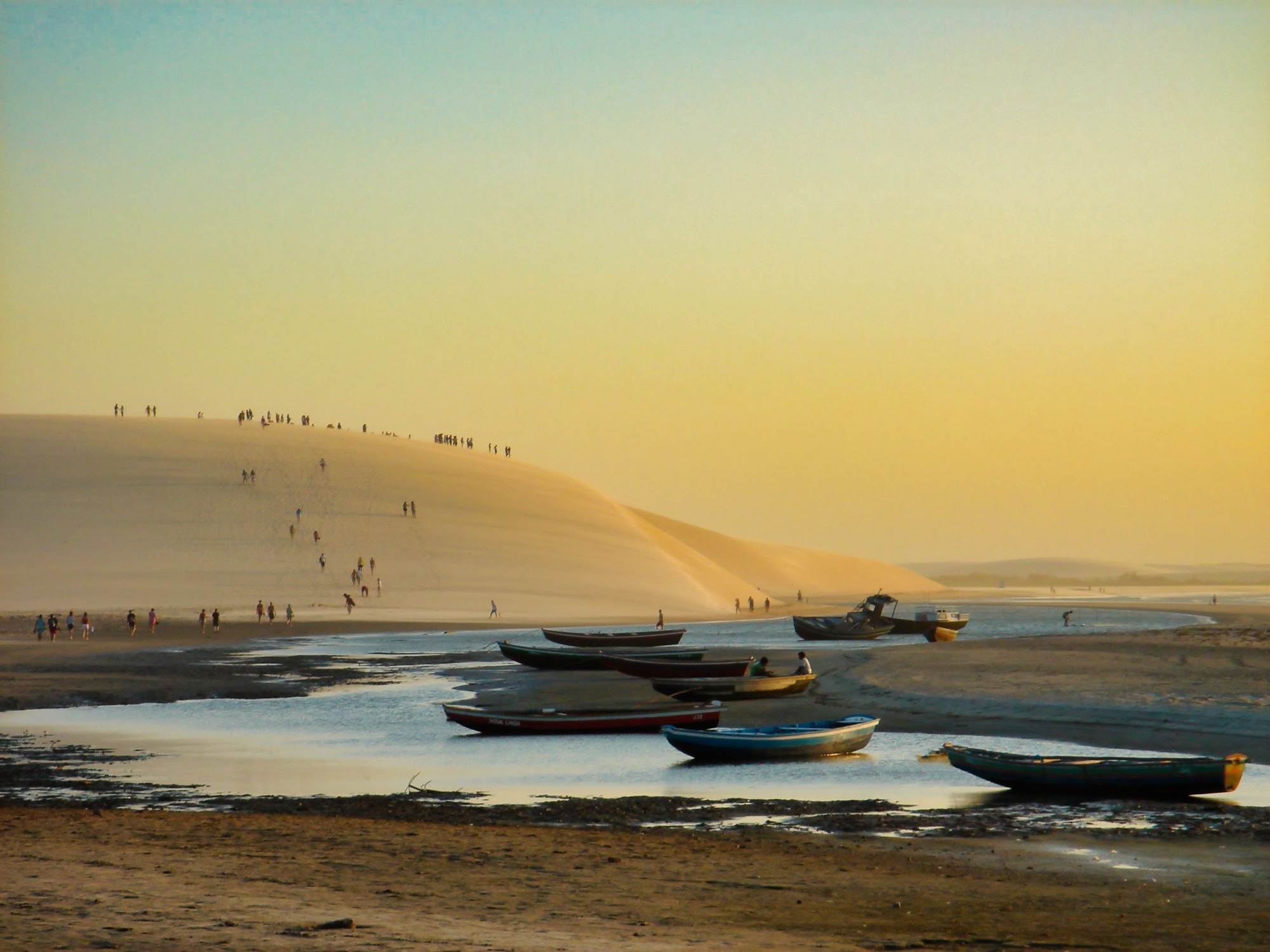
Dry season, rainy months, full lagoons and the best wind for kitesurf — everything you need to pick the right month for your trip to Jeri.
Jericoacoara is warm all year — temperatures hover around 30–32°C and the sea stays a comfortable 27–29°C whenever you come. So the real question isn't whether it'll be nice, but what you want from your trip: cloudless skies and strong wind, full mirror-like lagoons, or lower prices and fewer people. Here's how the year breaks down.
Sunny, dry and breezy. Cloudless skies from August, strong trade winds, perfect for dunes, lagoons and water sports. This is the classic time to see Jeri — and the most popular.
Warm with passing showers (rarely all-day rain). The landscape turns green, the lagoons refill, and prices and crowds drop. A good pick if you want value and don't mind the odd downpour.
Tail end of the festive high season. Still busy and lively after New Year, generally dry with good wind. Book ahead.
The rainy months. Expect short, warm showers and a lush green backdrop. Carnival (February) is a big, festive exception — busy and pricey — but outside it, this is the quietest, most affordable window. The lagoons start to refill.
A sweet spot many travelers miss. Rain is fading, the lagoons are full and glassy, the crowds are thin and prices are still reasonable. Great for the hammocks-in-the-water photos without the peak-season bustle.
Peak dry season begins. July brings Brazilian school holidays and big crowds; August is drier still, with the wind picking up hard — often 30–40 knots — and the kitesurf crowd arriving.
Arguably the best all-round window: cloudless skies, the strongest and steadiest wind of the year, and the lagoons still holding up early on. Prime time for kitesurfers and sun-seekers alike.
Dry and beautiful, but the New Year build-up makes it the busiest, priciest stretch of the year. Reserve everything — transfer included — well in advance.

What is the best time of year to visit Jericoacoara?
July to December is the dry season and the best overall window. August to November has almost no rain. For the fullest lagoons and fewer crowds, May to July is ideal; for the strongest kitesurf wind, September to November.
When is the rainy season?
The wettest months are February, March and April. It rarely rains all day, but expect passing showers, greener scenery, lower prices and refilling lagoons.
When are the lagoons full?
Lagoa do Paraíso and Lagoa Azul are fullest from around May to September, after the rains. Late in the dry season they can shrink, so mid-year is best for the classic photos.
When is the best wind for kitesurfing?
The trade winds blow from about July to January and are strongest September to November, often above 30–40 knots in August and September. Book early — it's peak season.
Is Jeri crowded at New Year and Carnival?
Yes. December–January and Carnival (February), plus July's school holidays, are the busiest and priciest. Reserve your transfer and hotel well ahead for these dates.
Lock in your door-to-door transfer from Fortaleza — shuttle and 4×4 included — and cross the dunes into Jeri stress-free.
Book your transfer