Jericoacoara, one of the world's most beautiful beaches
A former fishing village that the international press put on the map — and that still lives up to it. Here's the recognition behind the reputation, what makes Jeri special, and how to get there.
Updated September 2026 Jericoacoara, Ceará
Jericoacoara — "Jeri" to those who know it — sits on the northwest coast of Ceará, inside a protected national park. For decades it was an isolated fishing village with no paved road, no electricity and no cars. Then the international press discovered it, and the world followed.
The recognition behind the reputation
1994
The Washington Post named Jericoacoara one of the ten most beautiful beaches in the world. For a village most travelers had never heard of, it was a turning point — and the start of its reputation as one of Brazil's must-see destinations.
Today
Jericoacoara Beach holds a TripAdvisor Travelers' Choice distinction, awarded to places that consistently earn outstanding reviews from travelers — a modern echo of that first accolade, from the people who actually make the trip.
Protected
The whole area is a national park (Parque Nacional de Jericoacoara), which is why the dunes, lagoons and skyline remain undeveloped — no high-rises, no cars in the village, just sand streets and the ocean.
What makes Jericoacoara so special
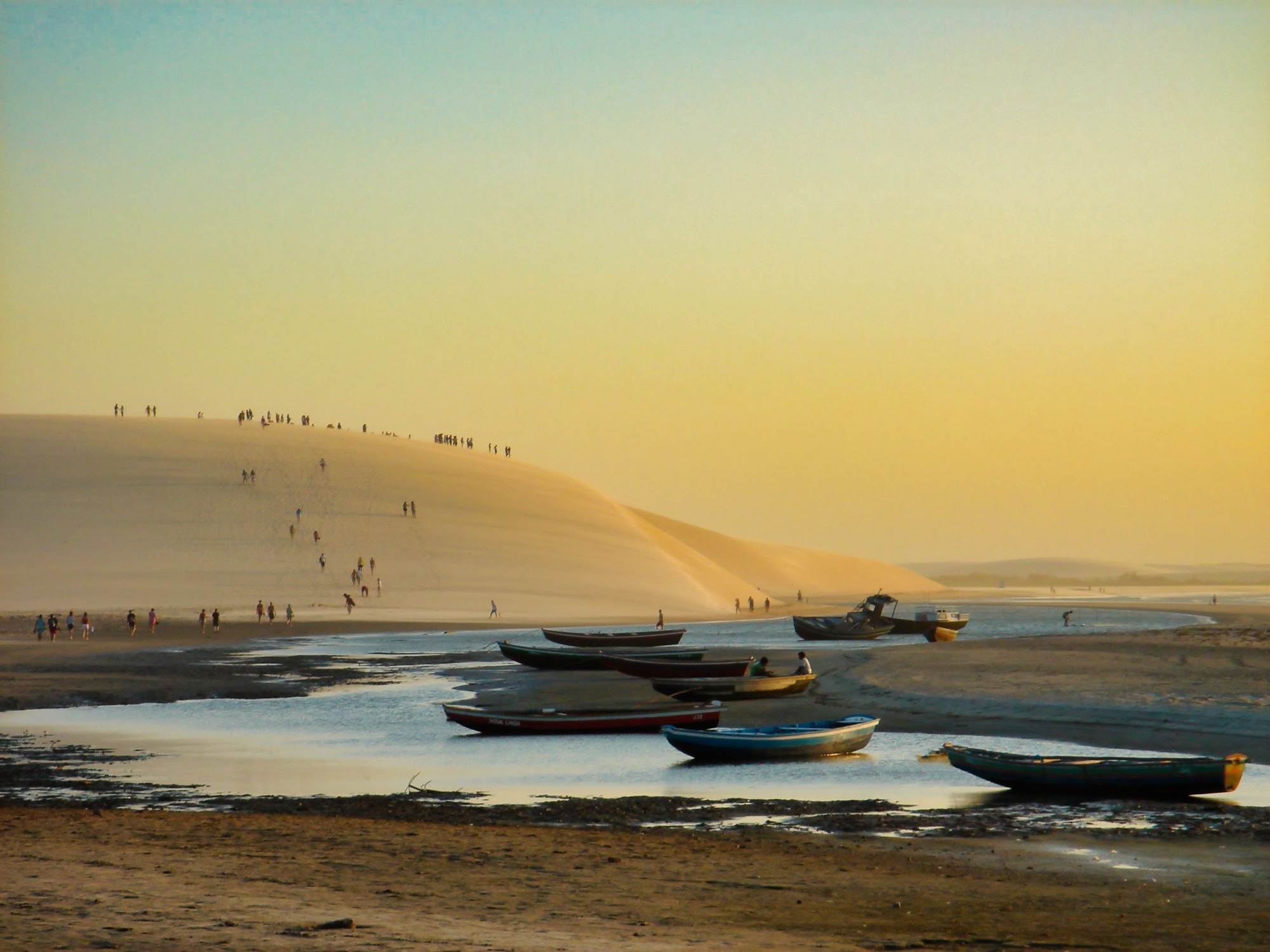
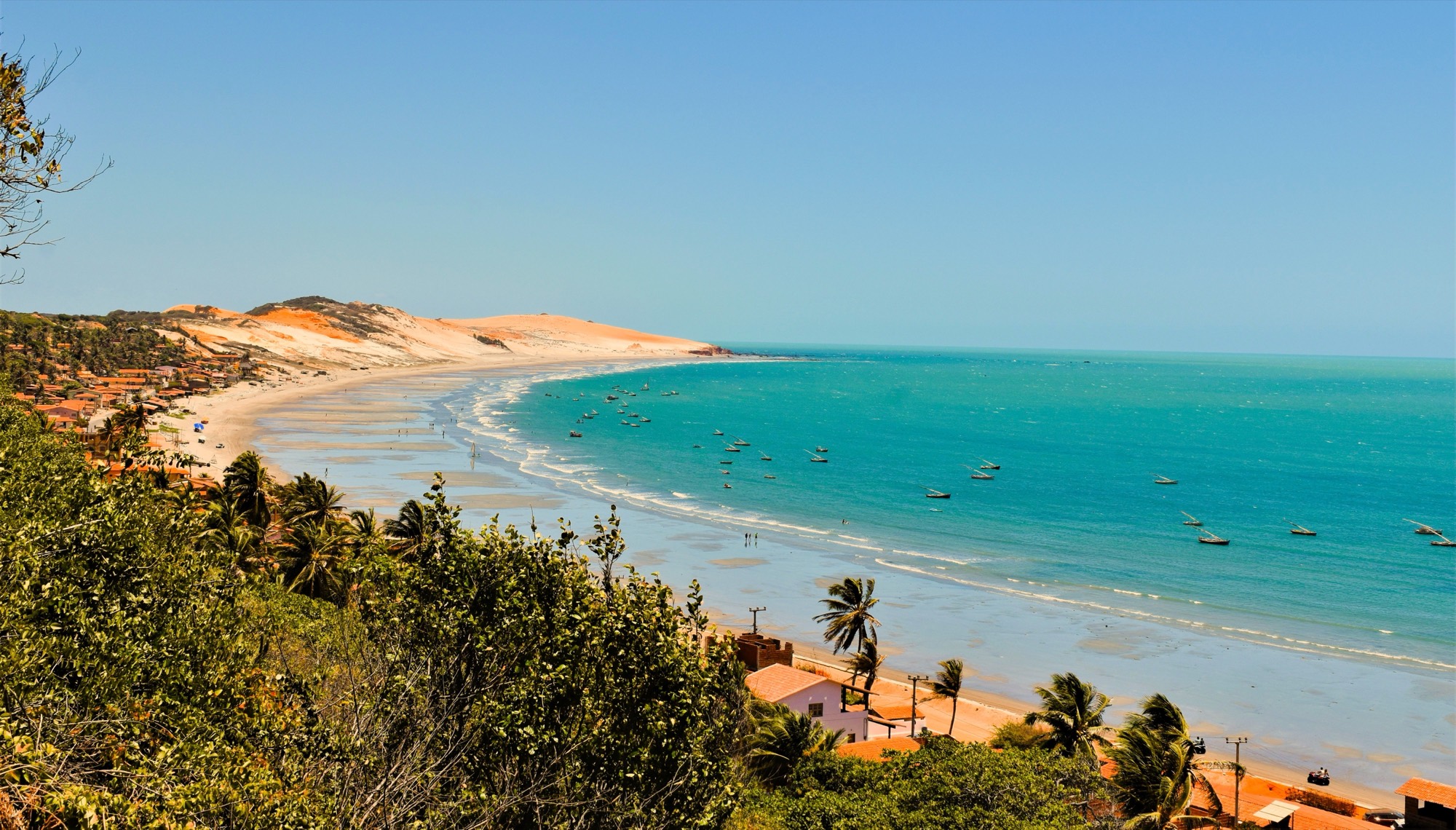
The magic of Jeri is that three landscapes meet in one place: desert dunes, freshwater lagoons and the open Atlantic. You can climb a dune at sunset, swim in a warm turquoise lagoon and watch kitesurfers on the sea — all within the same afternoon.
Duna do Pôr do Sol — the giant sunset dune where the whole village gathers each evening to watch the sun drop into the ocean.
Pedra Furada — the iconic stone arch carved by the sea, one of the most photographed spots on the Brazilian coast.
Blue and Paradise lagoons — calm, warm freshwater lagoons with natural "chairs" set right in the water.
Car-free sand streets — no asphalt, no traffic; you move around on foot, by bike or by buggy.
World-class wind — steady breezes make Jeri one of the best kitesurf and windsurf spots on the planet.
Dunes, lagoons and ocean meet at Jericoacoara — the landscape that earned its reputation.
The one catch: getting there
Everything that keeps Jeri beautiful also keeps it hard to reach. There is no road into the village: the paved route ends at Jijoca, and the last stretch crosses the national park dunes, passable only by 4×4. From Fortaleza it's about 5h40 door to door — roughly 5 hours by shuttle to Jijoca, then a 40-minute 4×4 jardineira across the dunes.
That's the single piece worth organizing in advance. A door-to-door transfer covers your hotel or airport pickup, the shuttle and the 4×4 in one booking, from R$210 per person — so the only thing left to plan is which lagoon to swim in first. See how to get to Jericoacoara or compare prices and options.
Frequently asked questions
Why is Jericoacoara famous?
Jericoacoara went from an isolated fishing village to a world-known destination after The Washington Post named it one of the ten most beautiful beaches in the world in 1994. It's famous for its towering dunes, freshwater lagoons, the Pedra Furada arch, its car-free streets and its sunsets.
Is Jericoacoara one of the best beaches in the world?
Yes. It was ranked by The Washington Post among the world's ten most beautiful beaches, is a TripAdvisor Travelers' Choice beach, and sits inside a protected national park. Its mix of dunes, lagoons and ocean is considered one of the most striking coastal landscapes in South America.
Is Jericoacoara worth visiting?
For most travelers, yes — it's one of Brazil's signature destinations. The trade-off is access: there are no roads into the village, so you arrive by shuttle to Jijoca and then a 4×4 across the dunes. A door-to-door transfer removes the only real friction of the trip.
How do you get to Jericoacoara?
From Fortaleza it's about 5h40 door to door: roughly 5 hours by shuttle to Jijoca de Jericoacoara, then a 40-minute 4×4 jardineira across the dunes into the car-free village — the only way in. A shared transfer covers both legs from R$210 per person.
See it for yourself
One booking covers your pickup in Fortaleza, the shuttle to Jijoca and the 4×4 across the dunes. The famous part is waiting on the other side.