Kitesurf guide
Kitesurfing in Jericoacoara
When the wind blows, where to launch, what lessons cost in 2026 and how to get your kite bag across the dunes.
When the wind blows, where to launch, what lessons cost in 2026 and how to get your kite bag across the dunes.
Jericoacoara's kite season runs from about July to January, with the strongest and steadiest wind from August to November, often 20 to 30 knots. Most riders launch at Preá, 11 to 12 km east of the village, because kites are kept off Jeri's main beach. The lagoons at Guriú and Tatajuba offer flat water.
Trade winds blow along this part of the Ceará coast from about July to January. They build through the morning and hold until sunset, mostly from the east and north-east, which makes them side-onshore on the main beaches. August to November is the heart of the season, with many days in the 20 to 30 knot range, and most riders get by with kites of around 5 to 9 m.
February to June is the rainy season: the wind is lighter and less reliable, though rarely gone for good. The water stays at 26 to 30°C all year, so a lycra or a thin top against the sun is all you need. For weather, crowds and lagoon levels month by month, see our guide to the best time to visit Jericoacoara.
| Period | Wind | Conditions | Good for |
|---|---|---|---|
| July | Building | Dry; Brazilian school holidays | All levels |
| August–November | Strongest and most consistent, often 20–30 kn | Dry and sunny | Intermediate and advanced; beginners with a school |
| December–January | Still reliable | Holiday crowds, higher prices | All levels |
| February–June | Lighter, unreliable | Rainy season | Lessons on windy days only |
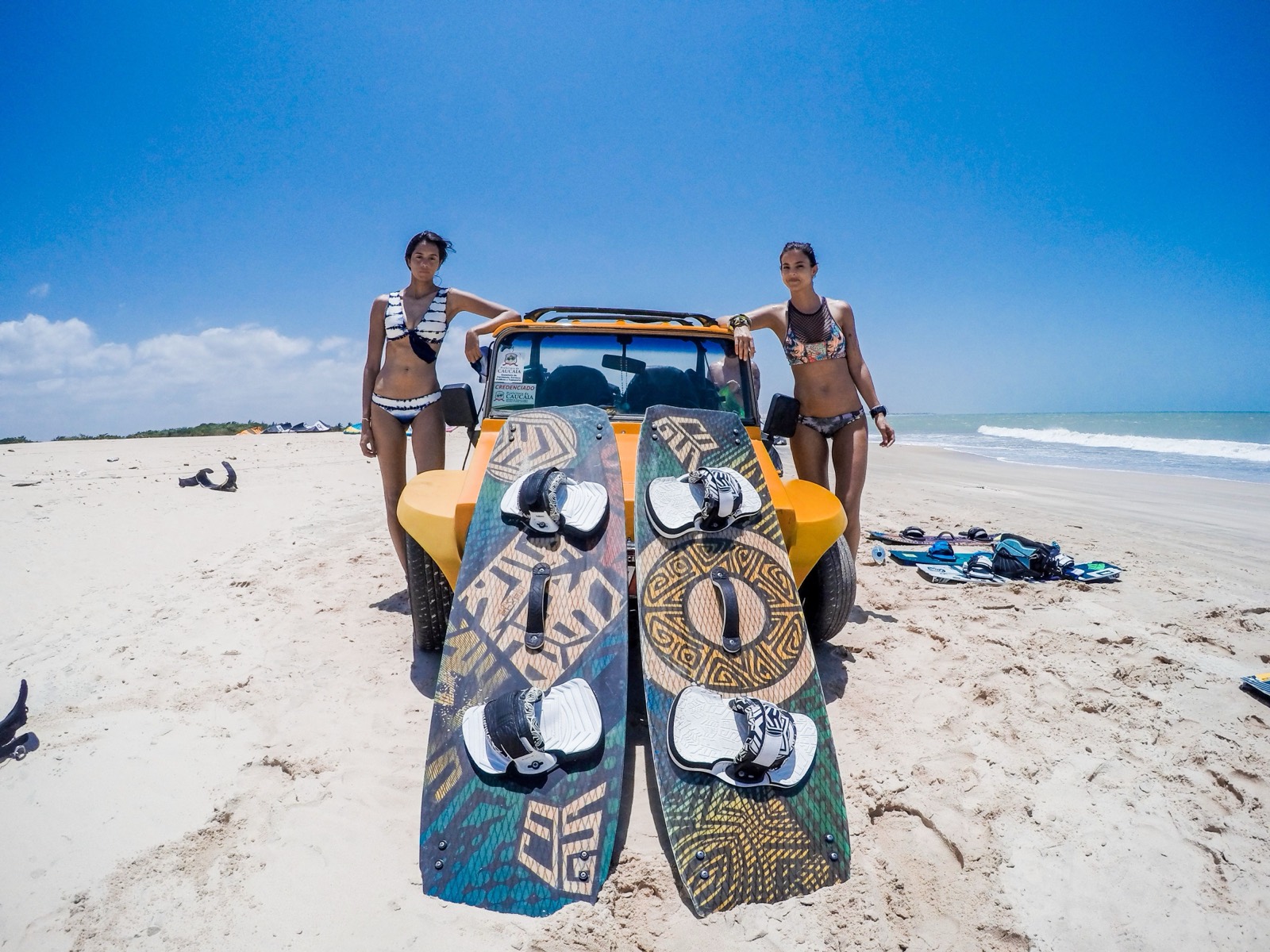
Preá is a long, wide beach 11 to 12 km east of the village, about 30 minutes by sand track. Most schools and kite centres are based here, there is plenty of room to launch, and the wind comes in side-onshore over open sea, with chop and some small waves near the shore. It is the default spot for lessons and for anyone staying more than a few days.
About 15 minutes by buggy from Preá, the Barrinha lagoon works best at low tide, when the water is shallow and flat. It's an easy place for first water starts and for practising transitions without chop.
The Guriú lagoon is about 15 minutes west of Jeri and works at mid to high tide, with steady side-onshore wind over flat water. A short downwinder from Jeri gets you there, past a wave spot on the way.
Nearly an hour west of Jeri, Tatajuba's river mouth runs best at mid to high tide, and the ocean side has small waves and kickers for experienced riders. Longer downwinders finish here, with a buggy carrying the bags.
Kiting and landing are not allowed on the main village beach, which is kept for swimmers and windsurfers. The only option close to town is a gusty spot by the dunes, for experienced riders only.
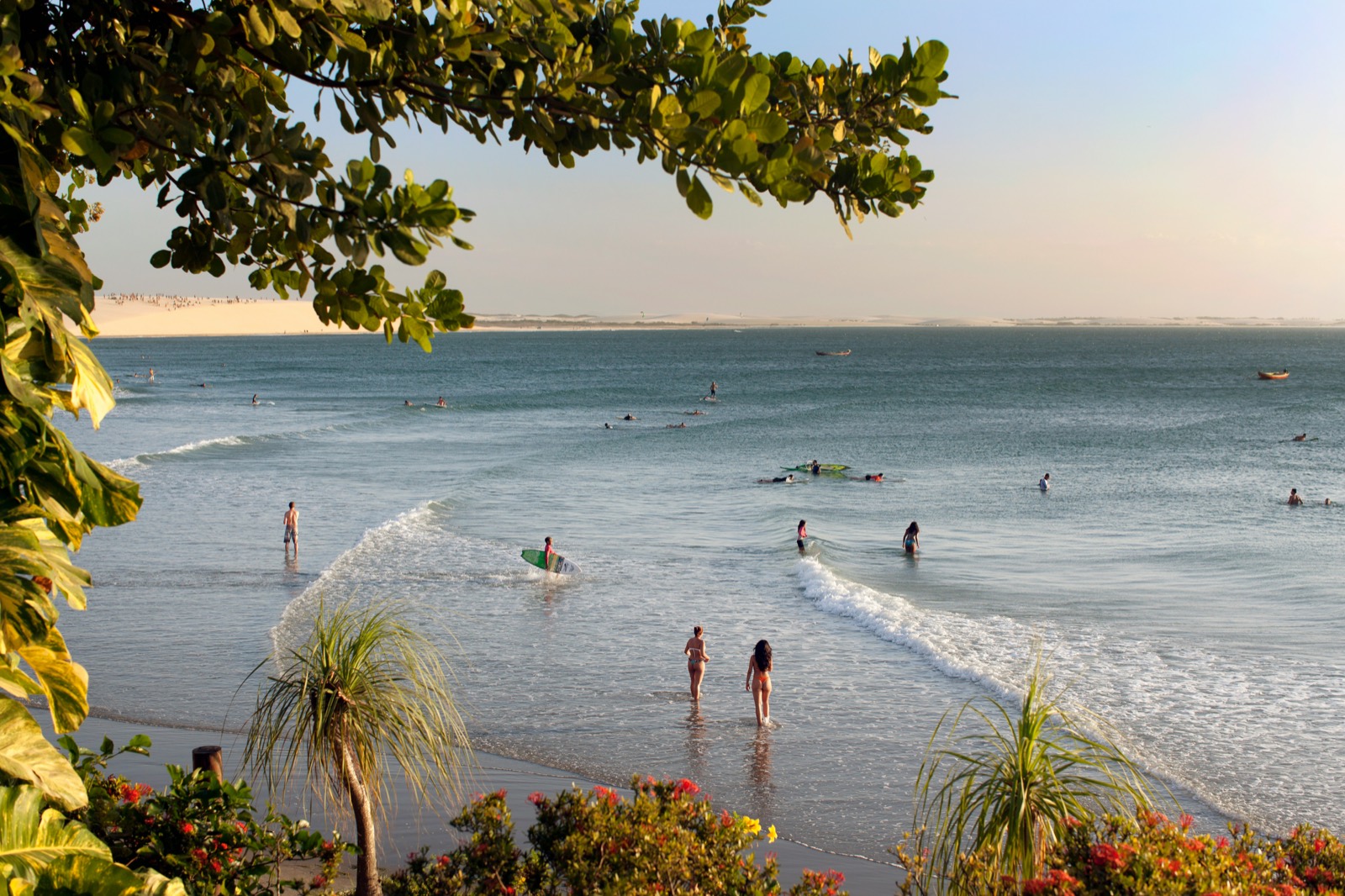
The classic run goes from Preá to Jeri and takes about an hour, depending on your level, with a buggy following on the sand. Longer runs west towards Tatajuba or Camocim cover 30 to 100 km of empty coast. Do them in a group or with an organised support buggy, never alone.
| Spot | From Jeri village | Water | Best tide | Level |
|---|---|---|---|---|
| Preá | 11–12 km east | Chop, small waves | Any | All, beginners with a school |
| Barrinha lagoon | ~15 min beyond Preá | Flat, shallow | Low | Beginners |
| Guriú lagoon | ~15 min west | Flat | Mid to high | Beginners to freestyle |
| Tatajuba | ~1 h west | Flat river mouth, ocean waves | Mid to high | Intermediate and up |
| Jeri main beach | In the village | · | · | No kiting |
Prices vary with the school, the group size and the season. As a guide from schools around Jeri and Preá in 2026: a 3-hour private lesson costs around R$900, a 9-hour beginner course spread over three days runs roughly R$1,800 to R$3,000 with equipment, and independent riders can rent gear from about R$180 an hour or R$290 to R$470 a day.
Nine hours is the usual target for riding on your own in flat water, though wind and talent both play a part. Ask what the price includes, since radio helmets, rescue by boat or buggy, insurance and certification vary from one school to the next. Schools teaching inside Jericoacoara National Park must be registered with the park administration, a rule ICMBio introduced in 2016, so it's a fair question to ask before you pay.
Preá puts you a short walk from the water, with quiet evenings. The village gives you restaurants and nightlife but adds a ride of about 30 minutes each way to the spot. Plenty of riders split their stay between the two. Our guide to where to stay in Jericoacoara compares the areas and prices.
The shared transfer from Fortaleza includes one suitcase and one backpack per person. A kite or board bag counts as extra or oversized luggage: mention it in the booking notes and space is set aside on the shuttle and the 4×4. You can book the shared transfer online from R$210 per person one-way. For a group with several bags, a private transfer (R$1,200 per vehicle for up to 4 people, R$1,400 for up to 6, pickup time of your choice) leaves more room. The shared transfer ends in Jericoacoara village; if you're staying in Preá, ask through the custom quote form.
When is kitesurf season in Jericoacoara?
From about July to January. August to November has the strongest and most consistent wind, often 20 to 30 knots. February to June is the rainy season, with lighter and less reliable wind.
Is Jericoacoara good for beginner kitesurfers?
Yes, with a school. Beginners learn on the wide beach at Preá or in shallow lagoons such as Barrinha at low tide and Guriú at mid to high tide. The sea at Preá has some chop, so many first sessions happen in the lagoons.
Can you kitesurf on the beach in Jericoacoara village?
No. Kiting and landing are not allowed on the main village beach, which is kept for swimmers and windsurfers. Riders launch at Preá, 11 to 12 km east, or at the lagoons of Guriú and Tatajuba to the west.
How much do kitesurf lessons cost in Jericoacoara?
In 2026, a 3-hour private lesson costs around R$900 and a 9-hour beginner course roughly R$1,800 to R$3,000 with equipment, depending on the school and the group size. Gear rental for independent riders starts at about R$180 an hour.
Can I bring kite gear on the transfer from Fortaleza?
Yes. Mention the kite or board bag in the booking notes so space is set aside on the shuttle and the 4×4; the standard allowance is one suitcase and one backpack per person. With several bags, a private transfer for up to 4 or 6 people leaves more room.
Shuttle from Fortaleza and 4×4 to Jeri in one booking, from R$210 per person. Add the kite bag in the booking notes.
Book your transfer